Table of Contents
ToggleIntroduction
The internet is full of unusual words, mysterious terms, and trending keywords that suddenly gain attention. One such term is Zupfadtazak. Many people search online asking, “Is Zupfadtazak dangerous?” because they come across the term on websites, social media platforms, forums, or search engine results. However, finding reliable information about it can be challenging.
The confusion surrounding Zupfadtazak has led to numerous discussions about its meaning, origin, and potential risks. Some people believe it may be a chemical substance, while others think it could be a medication, technological product, or simply a fictional term. Due to the lack of verified information, many users are understandably concerned and want to know whether Zupfadtazak poses any danger.
This article explores everything currently known about Zupfadtazak, examines whether it is dangerous, discusses potential risks associated with unknown terms and products, and provides guidance on how to stay safe when encountering unfamiliar names online.
What Is Zupfadtazak?
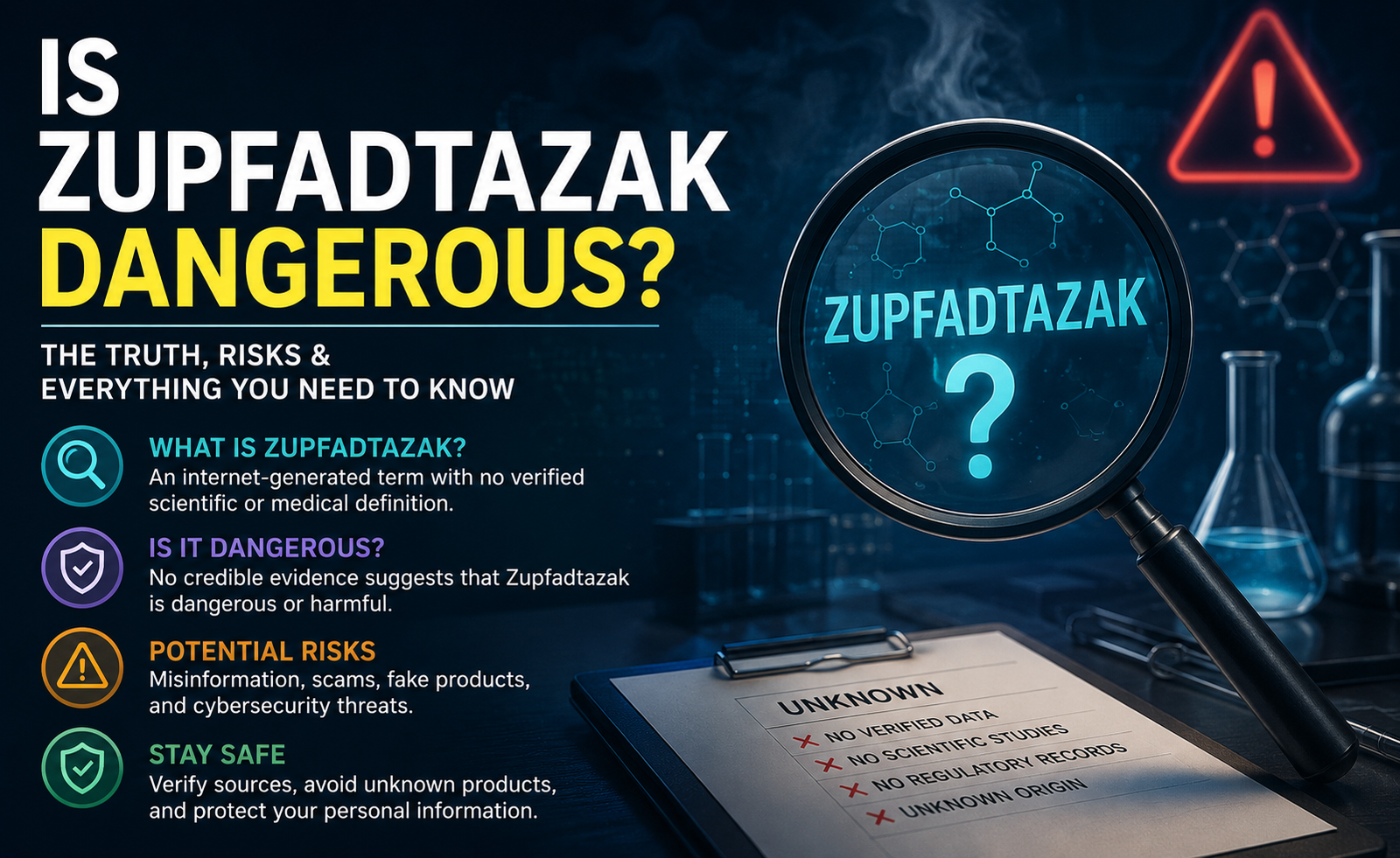
One of the biggest challenges when discussing Zupfadtazak is that there is no widely recognized definition of the term. Unlike established medications, chemicals, diseases, or products, Zupfadtazak does not appear in major scientific databases, medical references, or government regulatory records.
Several possibilities may explain the existence of the term:
1. An Internet-Generated Keyword
Many experts believe that Zupfadtazak may simply be an internet-generated keyword. Such terms sometimes emerge through automated content generation, search engine optimization (SEO) experiments, or artificial intelligence systems.
2. A Fictional Name
The term may have been created as a fictional name for a story, project, game, or online discussion. Fictional words often spread across the internet and generate curiosity among users.
3. A Placeholder or Test Term
Some websites use invented words during development, testing, or content creation. These terms occasionally become visible to the public and gain unexpected attention.
4. A Misunderstood Product Name
There is also the possibility that Zupfadtazak refers to a specific product, brand, or concept that has not yet gained widespread recognition.
Regardless of its origin, there is currently no universally accepted explanation for what Zupfadtazak actually represents.
Is Zupfadtazak Dangerous?
The Short Answer
Based on currently available information, there is no verified evidence that Zupfadtazak is dangerous.
There are no scientific studies, medical reports, toxicology analyses, or government warnings that identify Zupfadtazak as a harmful substance.
This means that claims describing it as dangerous are not supported by credible evidence.
However, the lack of information does not automatically prove that something is completely safe. Instead, it means that there is insufficient evidence to draw a definitive conclusion.
Why Are People Asking If It Is Dangerous?
The popularity of the question “Is Zupfadtazak dangerous?” can be explained by several factors.
Mysterious Name
The word itself sounds technical and scientific. Many people assume it may be a chemical compound, pharmaceutical drug, or industrial material.
Limited Information
When users search for Zupfadtazak, they often find inconsistent or vague information. This uncertainty naturally creates concern.
Online Speculation
Internet discussions frequently involve speculation. Once a few people begin asking whether something is dangerous, others become curious and repeat the question.
Viral Searches
Search trends can amplify interest in unusual topics. A mysterious keyword often attracts clicks simply because people want to discover what it means.
Understanding the Risks of Unknown Terms
Even though Zupfadtazak itself has not been proven dangerous, there are risks associated with unknown terms and products.
Misinformation
One of the greatest dangers is misinformation.
People may create articles, videos, or social media posts containing inaccurate claims. These claims can spread rapidly and influence public perception despite lacking factual support.
Examples include:
- False health warnings
- Fabricated scientific studies
- Misleading product descriptions
- Unverified safety concerns
Always verify information through trustworthy sources before accepting it as fact.
Potential Cybersecurity Risks
Unknown keywords sometimes become associated with suspicious online activity.
For example:
Fake Websites
Cybercriminals occasionally create websites around trending keywords to attract visitors.
Malware Downloads
Some websites encourage users to download files related to mysterious terms. These downloads may contain harmful software.
Phishing Attempts
Fraudulent sites may use curiosity-inducing keywords to collect personal information from visitors.
To stay safe:
- Avoid downloading unknown files.
- Do not share sensitive information.
- Use trusted websites and security software.
Could Zupfadtazak Be a Chemical?
Currently, there is no evidence that Zupfadtazak is a recognized chemical substance.
Real chemical compounds are usually documented in:
- Scientific journals
- Research databases
- Safety data sheets
- Regulatory agency records
Since Zupfadtazak does not appear in major scientific references, it is unlikely to be a well-known chemical.
However, if someone markets a product using this name, consumers should exercise caution until its contents and safety information can be independently verified.
Could It Be a Medication?
Similarly, there is no indication that Zupfadtazak is an approved medication.
Legitimate medicines are typically listed in:
- National drug databases
- Pharmaceutical registries
- Medical reference systems
- Regulatory agency records
Because Zupfadtazak does not appear in these sources, there is no evidence that it is an approved pharmaceutical product.
Never consume any substance marketed under an unfamiliar name without consulting a qualified healthcare professional.
Warning Signs to Watch For
If you encounter a product called Zupfadtazak, consider the following warning signs.
No Ingredient List
Legitimate products generally disclose their ingredients or components.
No Manufacturer Information
Trustworthy products clearly identify the company responsible for production.
Extraordinary Claims
Be cautious of claims such as:
- Instant cures
- Guaranteed results
- Miracle treatments
- Secret scientific breakthroughs
Lack of Independent Reviews
Products without credible reviews or expert analysis should be approached carefully.
Requests for Sensitive Information
Avoid websites that request personal, financial, or account information without a valid reason.
The Importance of Critical Thinking
The Zupfadtazak phenomenon highlights the importance of critical thinking online.
Whenever you encounter an unfamiliar term:
Ask Questions
- What is it?
- Where did it originate?
- Who is providing the information?
Check Sources
Verify claims using reliable and authoritative references.
Look for Evidence
Scientific claims should be supported by research, data, and expert analysis.
Avoid Emotional Reactions
Sensational headlines are often designed to attract attention rather than provide accurate information.
How Search Trends Create Confusion
Search engines often reveal fascinating examples of how curiosity shapes online behavior.
A term can become popular simply because people are asking questions about it.
The process usually works like this:
- An unusual term appears online.
- Users become curious.
- Searches increase.
- Websites publish content about it.
- More users discover the term.
- Popularity continues growing.
This cycle can make a completely unknown word appear more significant than it actually is.
What Experts Would Recommend
If an expert were evaluating a mysterious term like Zupfadtazak, they would likely recommend:
Remain Skeptical
Do not automatically assume danger or safety.
Gather Information
Look for evidence from reliable organizations.
Avoid Unknown Products
Do not consume or use unidentified substances.
Protect Your Data
Be cautious when visiting unfamiliar websites.
Follow Verified Sources
Trust information from recognized institutions and experts.
Common Myths About Zupfadtazak
Myth 1: It Is a Dangerous Chemical
There is currently no evidence supporting this claim.
Myth 2: It Is an Illegal Substance
No verified information suggests that Zupfadtazak is an illegal substance.
Myth 3: It Is a Secret Government Project
There is no credible evidence supporting conspiracy theories involving Zupfadtazak.
Myth 4: Everyone Is Talking About It
While search interest exists, widespread recognition remains limited.
Myth 5: It Has Proven Health Effects
No scientific studies currently demonstrate health benefits or health risks.
Final Verdict
So, is Zupfadtazak dangerous?
Based on the information currently available, there is no verified evidence that Zupfadtazak is dangerous. In fact, there is very little evidence indicating exactly what Zupfadtazak is. It appears to be an obscure internet term that has generated curiosity and speculation.
While there is no reason to panic, caution is always wise when dealing with unfamiliar names, products, or online trends. Users should rely on credible sources, avoid making assumptions, and remain alert to potential scams, misinformation, and cybersecurity risks.
Until reliable evidence emerges, the most accurate conclusion is that Zupfadtazak remains a mystery rather than a confirmed threat.
FAQs
1. What is Zupfadtazak?
Zupfadtazak is an unusual term that currently lacks a widely recognized definition. It may be an internet-generated keyword, fictional name, or placeholder term.
2. Is Zupfadtazak dangerous?
There is no verified scientific or medical evidence proving that Zupfadtazak is dangerous.
3. Is Zupfadtazak a medication?
No credible records indicate that Zupfadtazak is an approved pharmaceutical drug.
4. Could Zupfadtazak be a scam?
The term itself is not necessarily a scam, but users should be cautious of websites or products that use unfamiliar names without providing clear information.
5. How can I stay safe when researching unknown terms online?
Use trusted sources, avoid downloading unknown files, verify claims through reputable organizations, and never share sensitive information with suspicious websites.