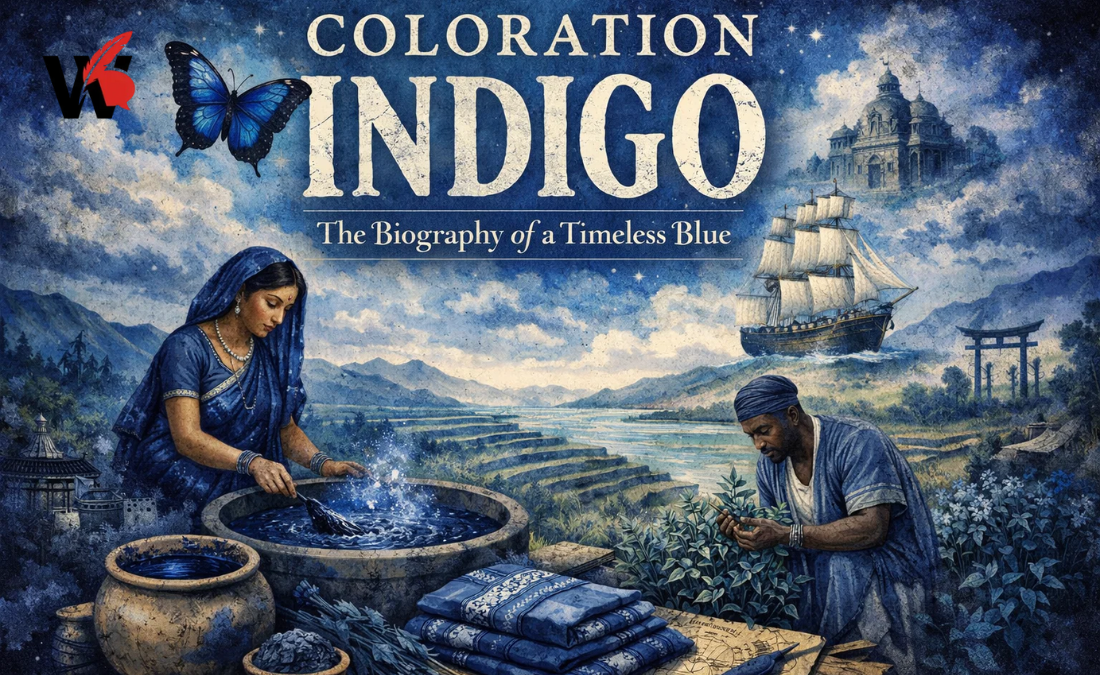
Introduction to Coloration Indigo
Coloration indigo is not merely a color applied to fabric; it is a historical presence that has evolved alongside human civilization. Its deep blue tone has crossed borders, influenced cultures, shaped economies, and reflected social change. As a biography, coloration indigo tells a story of discovery, mastery, conflict, reinvention, and endurance. From ancient plant-based origins to modern industrial applications, coloration indigo remains one of the most meaningful and recognizable colors in the world.
The Ancient Origins of Coloration Indigo
The life story of coloration indigo begins in antiquity, when early societies sought ways to produce durable blue pigments. Unlike reds or browns derived easily from earth and minerals, blue was rare and difficult to obtain. This rarity gave coloration indigo a special value. Ancient communities in South Asia were among the first to identify plants capable of producing indigo dye. Through careful observation, they learned that leaves contained hidden color that could be released through fermentation and exposure to air.
These early methods required patience and skill. The process was complex, involving water, heat, and time, yet it produced a color that resisted fading and carried a striking intensity. As a result, coloration indigo became deeply embedded in local traditions, clothing, and trade systems long before it reached other parts of the world.
Coloration Indigo and the Expansion of Global Trade
As civilizations expanded and trade routes developed, coloration indigo began its journey across continents. Merchants transported indigo-dyed textiles and pigment itself along major commercial networks connecting Asia, the Middle East, Africa, and Europe. The color became associated with distant lands, exotic goods, and luxury craftsmanship.
In Europe, coloration indigo was initially rare and highly prized. Local alternatives such as woad produced weaker blues, making true indigo more desirable. This imbalance led to economic competition and political tension, as domestic producers attempted to resist the growing dominance of imported indigo. Even so, coloration indigo continued to spread, valued for its depth, permanence, and beauty.
Cultural Identity and Symbolism of Coloration Indigo
Throughout its biography, coloration indigo has carried powerful symbolic meaning. In many African societies, indigo-dyed textiles represented status, wisdom, and spiritual protection. The depth of the blue often reflected the skill of the dyer and the time invested in the process. In these cultures, coloration indigo was more than decoration; it was a visual language.
In East Asia, particularly Japan, coloration indigo developed a distinct cultural identity. Indigo-dyed garments became part of everyday life, worn for their durability and comfort. Over time, the aesthetic appreciation of indigo deepened, embracing subtle variations and natural fading. The way coloration indigo aged gracefully became a reflection of philosophical values centered on simplicity and harmony with time.
The Science Behind Coloration Indigo
A defining chapter in the biography of coloration indigo lies in its unique chemistry. Unlike many dyes, indigo does not dissolve easily in water. To function as a dye, it must be transformed into a soluble form through reduction. Fabric immersed in this solution absorbs the color invisibly at first. When removed and exposed to air, the dye oxidizes and turns blue before the eyes.
This transformation fascinated generations of dyers and contributed to the almost mystical reputation of coloration indigo. Though ancient artisans did not understand the chemistry in modern terms, they mastered the process through experience. Their knowledge was often passed down orally, closely guarded within families and communities.
Coloration Indigo in the Age of Colonization
The biography of coloration indigo includes periods of hardship and injustice. During colonial expansion, indigo became a major commercial crop controlled by imperial powers. In regions such as India and the Caribbean, farmers were often forced to grow indigo under exploitative systems that prioritized profit over human welfare. Food crops were replaced, livelihoods were damaged, and resistance movements emerged in response.
During this era, coloration indigo became a symbol of both economic power and social suffering. Protests and uprisings linked to indigo cultivation played a role in shaping political awareness and reform. This chapter serves as a reminder that even a color can be deeply entangled with human struggle.
The Industrial Transformation of Coloration Indigo
The late nineteenth century marked a dramatic turning point. Scientists succeeded in creating synthetic indigo, chemically identical to its natural counterpart but far easier to produce in large quantities. This innovation transformed coloration indigo from an agricultural product into an industrial material. Traditional indigo farming declined rapidly, and global dyeing industries expanded.
Synthetic indigo made the color accessible on an unprecedented scale. Consistency, affordability, and efficiency redefined its role in society. While this shift led to the loss of many traditional practices, it also ensured that coloration indigo would remain a dominant color in the modern world.
Coloration Indigo and the Rise of Denim
Perhaps the most influential chapter in the modern biography of coloration indigo is its relationship with denim. The pairing of indigo-dyed yarns with sturdy cotton fabric created garments that were both practical and expressive. Denim jeans, originally designed for labor, became global icons.
What makes denim unique is the way coloration indigo adheres to the surface of fibers. Over time, wear and washing cause the dye to fade unevenly, creating patterns that reflect the wearer’s life. This personal aging process transformed coloration indigo into a medium of self-expression, linking fashion to individuality.
Contemporary Uses and Artistic Expression
Today, coloration indigo continues to inspire designers, artists, and craftspeople. In fashion, it appears in both traditional and experimental forms, bridging heritage and innovation. In art and interior design, indigo is valued for its emotional depth and calming presence.
At the same time, there has been a renewed interest in natural indigo dyeing. Artisans and small producers are reviving ancient methods, valuing the connection between material, process, and environment. These efforts represent a desire to restore meaning and sustainability to coloration indigo in a fast-paced world.
Environmental Awareness and the Future of Coloration Indigo
Modern awareness has added a new chapter to the biography of coloration indigo. Industrial dyeing has raised concerns about pollution, water use, and chemical waste. In response, researchers and manufacturers are developing cleaner technologies, including biological and low-impact dyeing processes.
The future of coloration indigo depends on balance. By combining scientific innovation with respect for traditional knowledge, it is possible to preserve the beauty of indigo while reducing its environmental footprint. This evolving relationship reflects broader changes in how society approaches production and responsibility.
Conclusion: The Living Biography of Coloration Indigo
Coloration indigo is a color with a life story as rich and layered as its hue. It has been a symbol of luxury, labor, resistance, identity, and creativity. From ancient fermentation vats to modern factories, from ceremonial cloth to everyday denim, coloration indigo has continuously adapted without losing its essence.
As a biography, coloration indigo reminds us that color is never just visual. It carries memory, meaning, and human effort. Its deep blue connects generations, cultures, and experiences, proving that some stories are best told not in words, but in color itself.